Hopewell Cape Travel Guide: Tides, Safety and Hopewell Rocks
Hopewell Cape Travel Guide: Tides, Safety and Hopewell Rocks
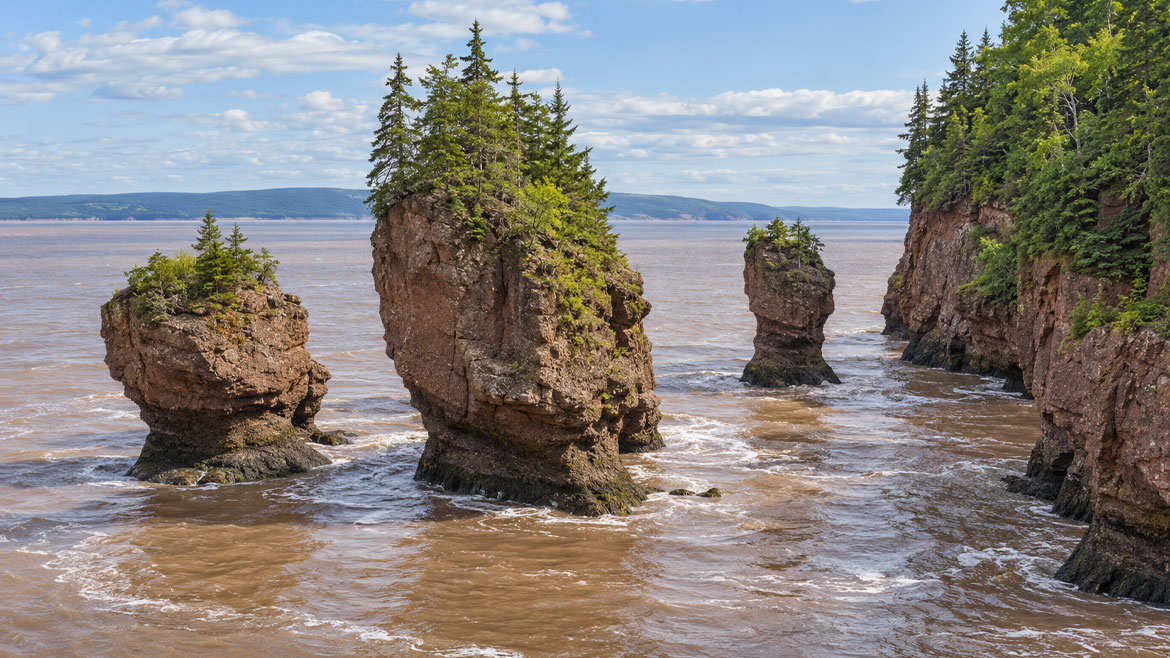
Hopewell Cape is best known as the home of Hopewell Rocks Provincial Park, where the Bay of Fundy transforms the landscape within a matter of hours. At low tide, visitors can descend to the ocean floor and walk beneath tree-topped sea stacks. At high tide, water surrounds those same formations, revealing the scale of one of the world’s most dramatic tidal environments.
A successful visit depends on more than arriving at the park gates. Tide timing determines whether the ocean floor is open, operating hours affect access, and coastal weather can change visibility and walking conditions quickly. It is also important to distinguish between the park’s internal shuttle and transportation to Hopewell Cape, as regular public transit from Moncton should not be assumed.
This guide explains how to plan around the tides, explore the park safely, understand accessibility considerations, and make Hopewell Cape part of a broader New Brunswick coastal itinerary.
What Makes Hopewell Cape Worth Visiting
Hopewell Rocks is the main attraction, but the experience extends beyond a single photograph of the famous formations. Trails, lookouts, tidal flats, interpretive exhibits, and the surrounding Albert County landscape help visitors understand how the coast has been shaped by water, weather, and human history.
The Geology and Tides of Hopewell Rocks
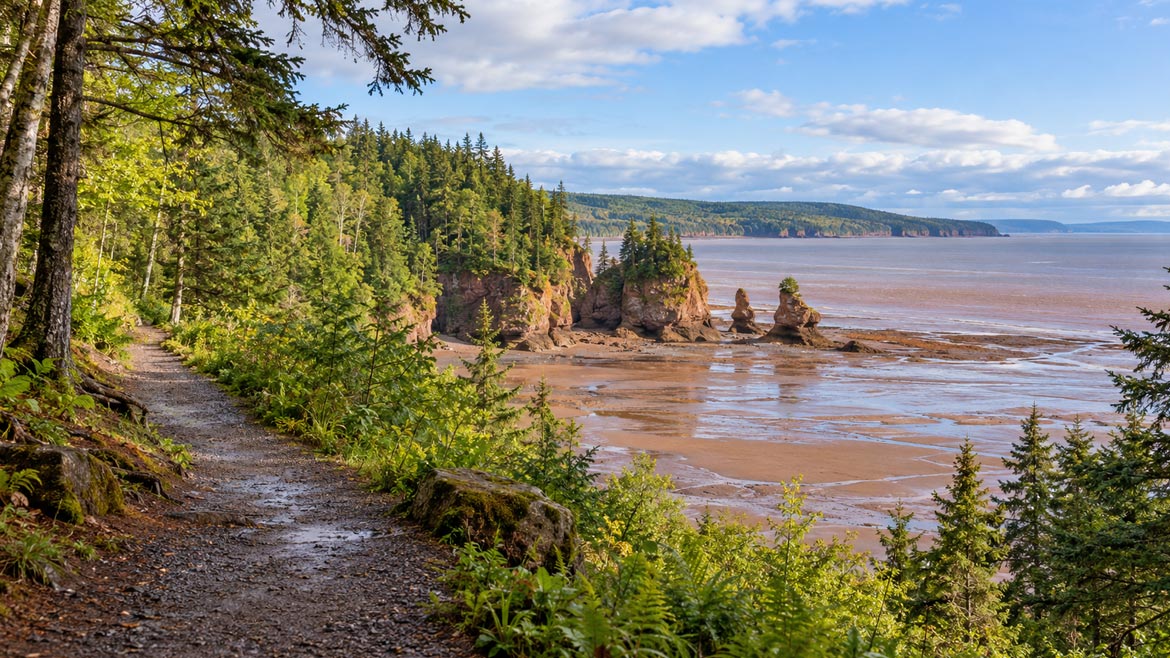
The Bay of Fundy is known for the world’s highest tides. At Hopewell Cape, those tides have helped shape a shoreline of cliffs, coves, and more than 20 free-standing sea stacks spread along approximately two kilometres of coast.
Often called flowerpot rocks, the formations are made from layers of sedimentary rock that have been gradually altered by tidal action, waves, rain, freezing, thawing, and erosion. Their narrower bases and tree-covered tops create the distinctive shapes seen today.
The difference between high and low tide is central to the experience:
- At low tide, designated parts of the ocean floor open for walking.
- At high tide, the formations appear as small islands surrounded by water.
- Roughly six hours separate high and low tide, although exact times and access windows change daily.
- Shoreline access is controlled by park staff and conditions, not simply by the predicted low-tide time.
The official park tide table is therefore more useful than a general Bay of Fundy forecast. It identifies periods of full, partial, or no ocean-floor access and displays times in Atlantic Time.
Cultural and Community Context
Hopewell Cape is part of a region with longstanding Mi'kmaq connections and layers of Acadian, maritime, agricultural, and shipbuilding history. The park’s Interpretive Centre introduces visitors to the tides, geology, wildlife, and Mi'kmaq stories associated with the landscape.
A short distance from the park, the Albert County Museum occupies historic buildings from Hopewell Cape’s period as the county shiretown. Its exhibits provide additional context on Indigenous history, Acadian settlement around Shepody, local shipbuilding, agriculture, and community life.
Visitors should remember that Hopewell Cape is also a small community. Using designated parking, respecting private property, staying on marked routes, and supporting local businesses all contribute to a more responsible visit.
Pro Tip
Many travellers leave after photographing the main sea stacks. Allow time for the Interpretive Centre, forest trails, viewing decks, and the quieter approach toward Demoiselle Beach for a broader understanding of the coast.
Planning Your Visit to Hopewell Cape
The tide should be the starting point for every visit. Once the preferred tidal phase has been identified, check whether it falls within the park’s current operating hours and allow enough time to reach the shoreline before access changes.
Choosing Between High Tide and Low Tide
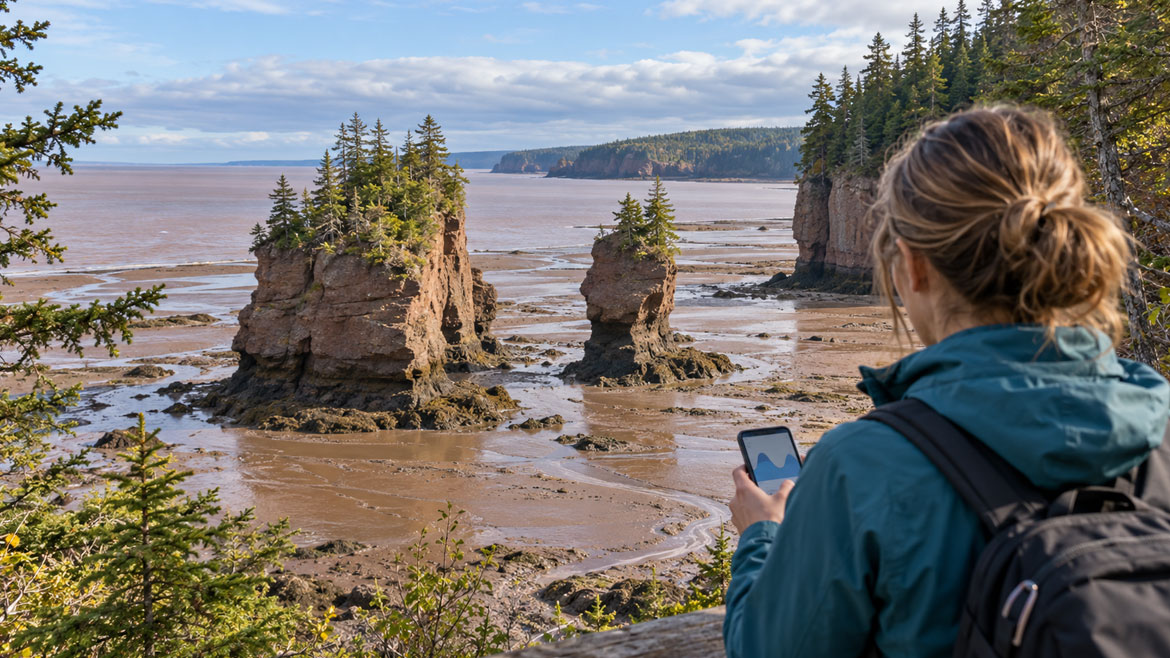
Low tide is the best choice for travellers who want to walk on the ocean floor, examine the formations from below, and explore the coves. The exposed surface may include mud, loose stones, and slippery rock, so this is an active shoreline visit rather than a conventional beach walk.
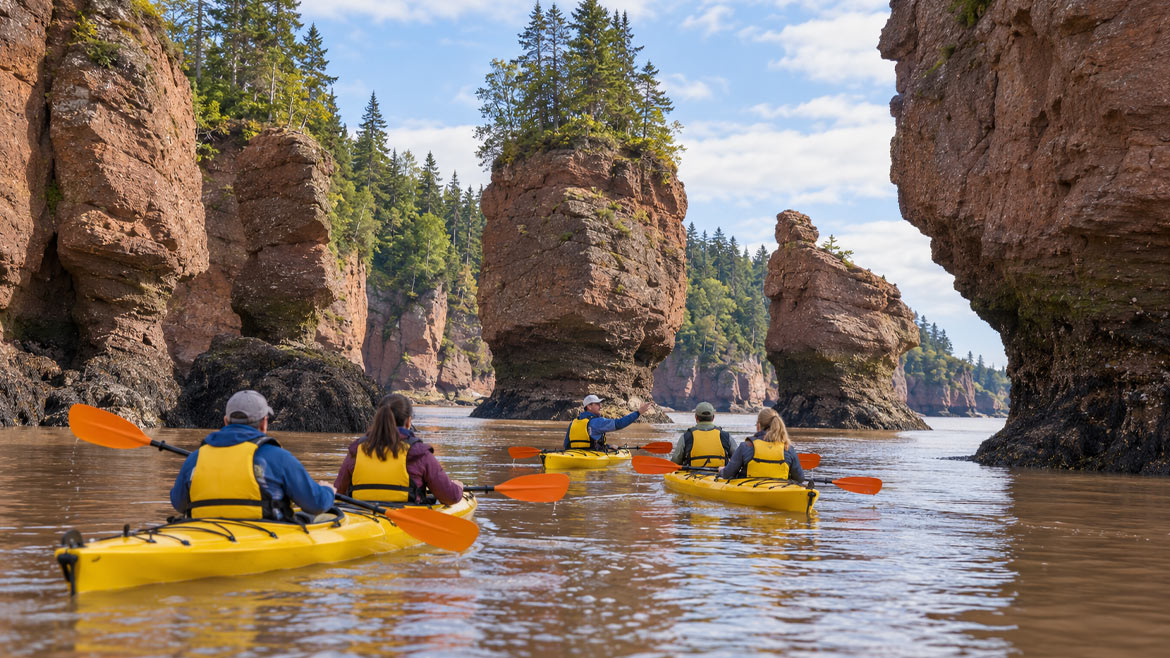
High tide provides a different visual experience. Visitors remain on the trails and observation decks while water surrounds the sea stacks. Seasonal guided kayaking may also operate at high tide through the park’s designated partner, subject to weather and availability.
Seeing both tidal phases provides the fullest experience. Admission is currently valid for two consecutive days during the operating season, making it possible to return for a second tide without waiting at the park for most of the day. Policies can change, so confirm ticket conditions when planning.
Common Mistake
Do not plan around the words “low tide” alone. Check the official access window, arrive with time to walk from the entrance, and follow staff instructions when the ocean floor begins to close.
Operating Season, Hours and Admission
Hopewell Rocks Provincial Park operates seasonally, generally from mid-May into October. Daily hours vary across the season and are usually longer during summer.
Access outside official operating dates and hours is prohibited. When the park is closed, facilities and staff are unavailable, safety barriers may be removed, and the risk of rockfall can be higher. Photographers should not assume they can enter for sunrise, sunset, or off-season images.
Admission fees, hours, food services, and activity schedules may change annually. Check the official park website shortly before travelling rather than relying on an older itinerary or saved screenshot.
Getting There, Parking and the Park Shuttle
Hopewell Rocks Provincial Park is located at 131 Discovery Road in Hopewell Cape. Route 114 is the principal road through the Fundy-Albert region and connects the area with Riverview, Moncton, Hillsborough, Riverside-Albert, Alma, and Fundy National Park.
A private vehicle is the most practical option for most travellers. On-site parking is available, but extra arrival time is sensible during busy summer periods.
The shuttle advertised by the park is an internal service. It carries visitors between the Interpretive Centre area and the top of the main ocean-floor stairway for a small fee. It is not a regular shuttle from Moncton. Travellers without a vehicle should confirm current private tour or transfer options before leaving the city.

Accessibility and Visitor Facilities
The park has accessible trails, viewing decks, facilities, and a ramp leading toward the ocean floor. An internal shuttle can also reduce the walking distance between the upper and lower areas.
The natural ocean floor itself presents a different challenge. Mud, uneven ground, stones, and changing moisture levels can make independent wheelchair or mobility-device travel difficult even when the access ramp is usable. Visitors with specific mobility requirements should contact the park before arrival for current conditions and assistance options.
Seasonal facilities may include:
- An Interpretive Centre
- Viewing platforms and marked trails
- Washrooms
- A restaurant and café
- Picnic areas
- A gift shop
- An internal shuttle
- Electric-vehicle charging stations
Opening dates and hours for individual services may differ from the park’s general schedule.
Safety and Coastal Weather
Conditions along Shepody Bay can change quickly. Fog may reduce visibility, wind can make exposed viewpoints uncomfortable, and rain can leave trails and rocks slippery.
For a safer visit:
- Wear footwear with good grip, ankle support, and materials that can be cleaned easily.
- Check the official tide table and local weather forecast on the day of travel.
- Obey ocean-floor closure announcements and all instructions from park staff.
- Keep away from cliff faces, unstable ledges, and closed areas.
- Do not climb the sea stacks.
- Keep children close on the ocean floor and near viewing areas.
- Carry a light waterproof layer, even when the inland forecast appears clear.
- Do not enter outside operating hours.
Swimming is not permitted at Hopewell Rocks. The park also does not allow visitors to launch private kayaks, canoes, or paddleboards from its property.
Experiencing Hopewell Cape Beyond the Main View
The famous formations deserve time, but the park becomes more rewarding when visitors move beyond the busiest viewing area. Its trail network connects coastal lookouts, forested sections, shoreline access points, and interpretive facilities.
Ocean-Floor Access and Shoreline Walks
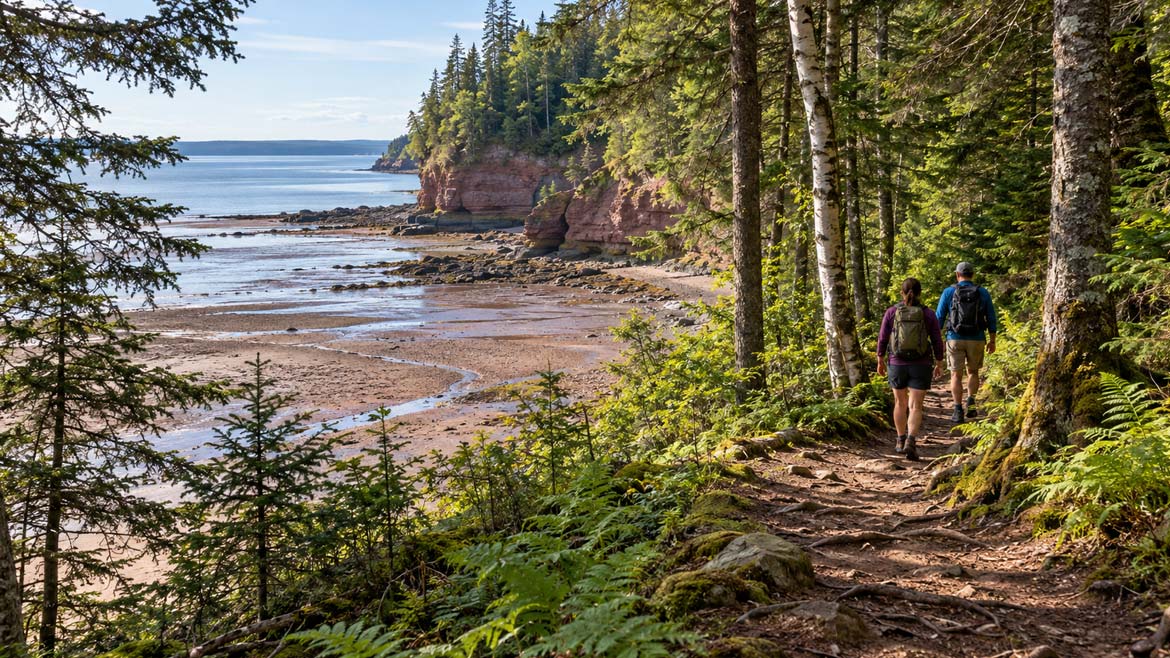
The park has three principal approaches to the ocean floor. The Main Deck uses a large staircase, the North Beach area has a ramp, and the route toward Demoiselle Beach descends more gradually through a quieter part of the park.
At low tide, visitors can walk through several coves and observe the sea stacks from below. Some rocky ledges may be slippery or unstable, so they make a sensible turnaround point for travellers who are unsure of their footing.
The Demoiselle route offers a different perspective on the cliffs and nearby coastal landscape. It is particularly useful for visitors who want a quieter walk rather than concentrating entirely on the most photographed formations.
Allow approximately two to three hours for one tidal phase if you plan to visit the Interpretive Centre, walk the trails, reach the ocean floor, and stop at several viewpoints. Seeing both high and low tide in one day requires a substantially longer visit.
Photography Tips for Hopewell Rocks
Low tide is most effective for images that emphasize the height, texture, and undercut shape of the sea stacks. High tide produces cleaner compositions with reflections and water surrounding the formations.
For more useful results:
- Review the tide table before choosing a photography time.
- Work from designated lookouts at high tide.
- Protect camera equipment from rain, mud, and windblown moisture.
- Bring a lens cloth and a secure camera strap.
- Include people carefully for scale without blocking narrow paths.
- Expect the water to appear naturally brown because the tides keep fine sediment suspended.
- Plan all photography within official operating hours.
Personal drones are prohibited in the park and surrounding areas. Professional filming requires advance written authorization.
Guided and Self-Guided Experiences
Hopewell Rocks is designed primarily as a self-guided park. Interpretive staff are stationed around the grounds during the operating season and can answer questions about geology, tides, wildlife, and safe access.
Visitors looking for a guided water experience can check the availability of high-tide kayaking with the park’s designated operator. Weather, tide conditions, age requirements, and seasonal schedules may affect availability, so advance booking is advisable.
Scheduled interpretation, group programs, and special events can change from year to year. Consult the official events calendar if a guided component is important to your visit.
Food and Local Culture
The park normally operates seasonal food services, including the High Tide Restaurant and a smaller café near the main stairway. Individual opening periods may be shorter than the park season.
Hopewell Cape and neighbouring communities offer additional reasons to slow down. The Albert County Museum provides the strongest historical complement to the park, while Hillsborough and Alma have seasonal shops, cafés, and locally operated businesses. Opening hours can be limited outside summer, so check before building a meal stop into a fixed itinerary.
Pro Tip
Treat two to three hours as a practical minimum for the park, not a complete visit to the region. Travellers interested in local history, food, hiking, or both tidal phases should reserve most of a day or stay overnight nearby.
Adding Hopewell Cape to a New Brunswick Itinerary
Hopewell Cape fits naturally into a journey along the Fundy coast. Route 114 connects several communities and attractions, making it possible to combine the tidal landscape with hiking, wildlife observation, heritage, and coastal food.
Nearby Places to Consider
The surrounding region offers several logical additions, but opening seasons and road conditions should be checked individually.
- Albert County Museum: A close-by introduction to Hopewell Cape’s community, Acadian, maritime, and county history.
- Hillsborough: A convenient stop along Route 114 with local heritage attractions and services.
- Mary’s Point: An important coastal and birding landscape on Shepody Bay, with access restrictions that should be respected.
- Riverside-Albert: A small community near marshland scenery and the Crooked Creek area.
- Cape Enrage: A rugged headland with a lighthouse and coastal views, operating seasonally.
- Alma: A practical base for food, accommodation, and access to Fundy National Park.
- Fundy National Park: A year-round national park with forest, waterfalls, shoreline, camping, and an extensive hiking network.
- Fundy Trail Provincial Park: A longer coastal extension with lookouts, beaches, trails, and access to additional Bay of Fundy scenery.
A Practical Multi-Day Approach
For a one-day trip, focus on Hopewell Rocks and one nearby heritage or community stop. Attempting to combine the park, Cape Enrage, Alma, and a substantial hike can turn the day into a rushed drive.
With two or three days, travellers can organize the trip around the tide rather than forcing the tide into a crowded schedule. One day can centre on Hopewell Rocks and Albert County history, while another can be devoted to Alma and Fundy National Park.
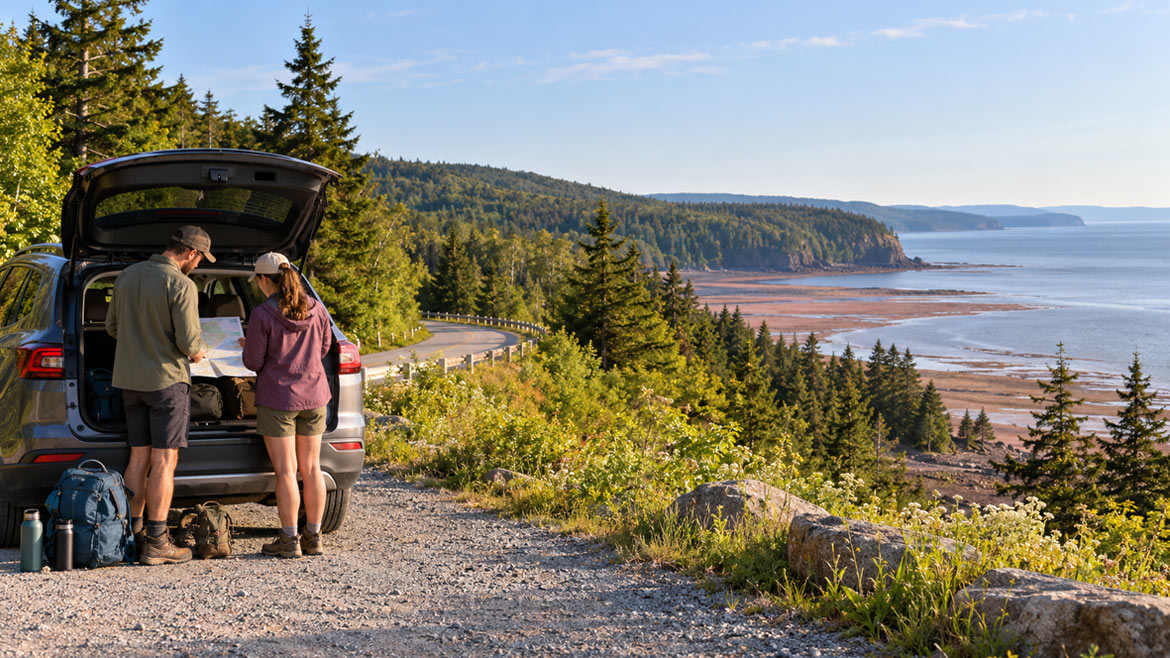
Fundy Trail Provincial Park can be added when time, weather, and seasonal access permit.
Pre-Trip Checklist
Before leaving, confirm that:
- The park is open on your intended date.
- The official tide table has been reviewed in Atlantic Time.
- Your preferred ocean-floor access window falls within park hours.
- Transportation to Hopewell Cape is arranged.
- Internal shuttle availability has been checked if needed.
- Footwear and weather protection are suitable for coastal conditions.
- Accessibility requirements have been discussed with the park.
- At least two to three hours have been reserved for one tidal phase.
- Nearby attractions and restaurants are open.
- Camera plans comply with park hours and the drone prohibition.
Plan Your Hopewell Cape Visit with Alaedin Travel Canada
Alaedin Travel Canada can help incorporate Hopewell Cape into a New Brunswick itinerary with realistic driving plans, appropriate tide timing, regional accommodation, and complementary stops along the Fundy coast. Confirming current park information before departure ensures that the itinerary remains safe, efficient, and aligned with seasonal conditions.
Tours

Eastern Canada Tour – 7 Days / 6 Nights
$950.00 /starting at

Eastern Canada Tour – 9 Days / 8 Nights
$1,790.00 /starting at

Vancouver Victoria Whistler Tour – 5 Days / 4 Nights
$2,990.00 /starting at
